Product Description
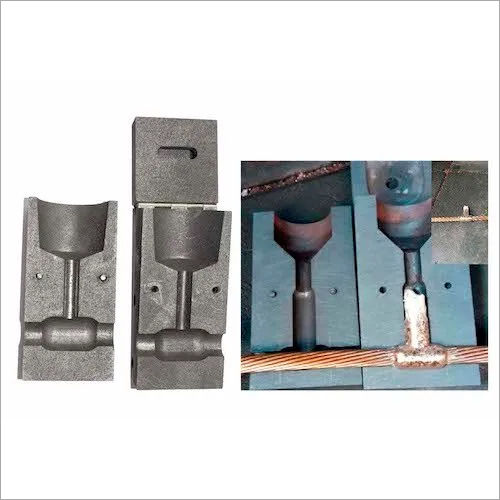
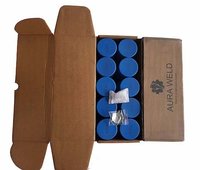
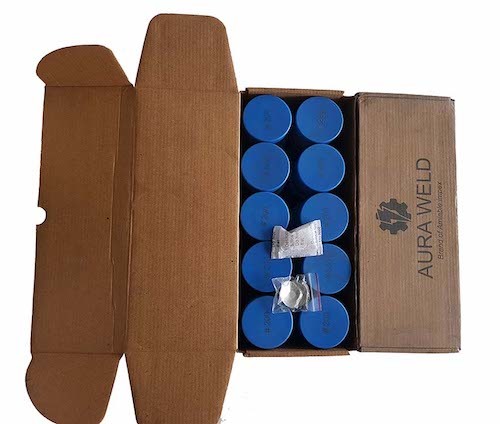
We are offering premium grade Exothermic Welding Mould that is designed and developed as per the industrial standards using advanced production technologies. It is made up of top-quality thermal resistant materials that offer excellent protection from extreme temperature of molten materials. The design and size of this dimensionally accurate mould can be customized as per the clients demand. Buyers can get this industrial class Exothermic Welding Mould with a minimum order quantity of 10 boxes.
Features:
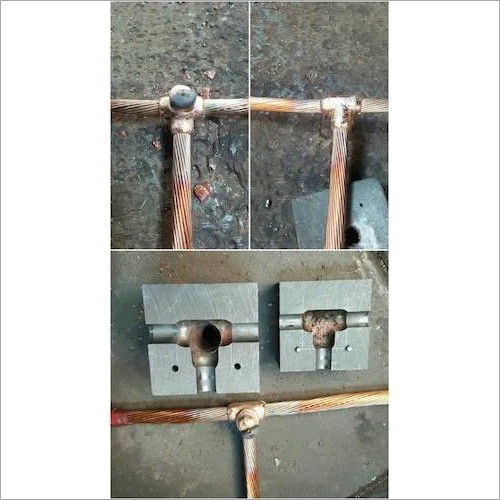
Precisely machined mould that gives uniform weld joints,
High temperature resistant properties,
Excellent crack resistance,
Compact design.
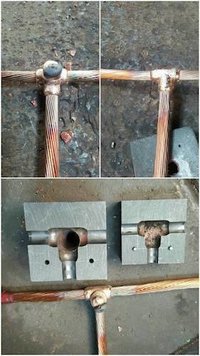
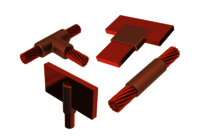
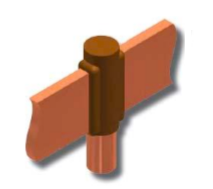
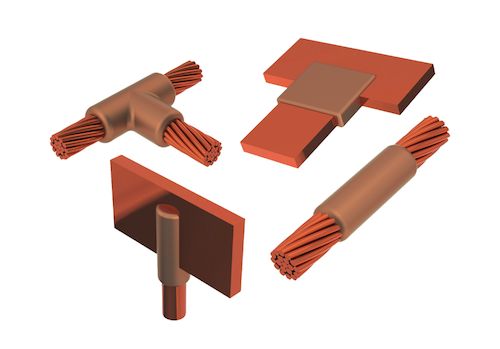
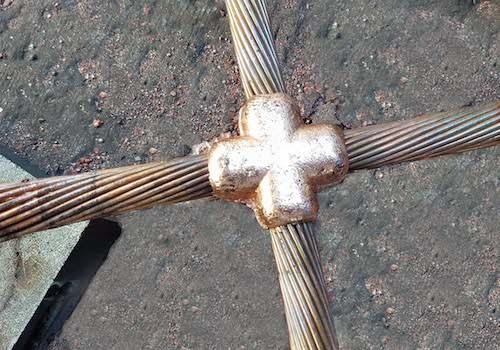
Versatile Weld Types for Reliable ConnectionsOur exothermic welding mould supports a variety of weld types such as cable to cable, cable to ground rod, cable to tape, and tape to plate. This adaptability ensures it meets a wide range of grounding, bonding, and lightning protection applications with assured reliability and compliance to global standards.
Built for Extreme ConditionsManufactured from high-quality graphite and reinforced with metal, steel, or ceramic elements, the mould endures ambient to extreme exothermic temperatures exceeding 1400C. Its leak-proof, robust construction ensures reliable operation indoors or in challenging outdoor field environments.
Customizable and Efficient DesignThe welding mould offers customization based on conductor sizes from 10mm2 to 1000mm2. It is available in single or double cavity designs and provides options for an integrated or detachable plunger/handle, meeting different user preferences and applications efficiently.
FAQ's of Exothermic Welding Mould:
Q: How do I choose the correct exothermic welding mould for my application?
A: Select a mould based on your specific connection type, such as cable to cable or cable to ground rod, and ensure it accommodates your conductor size (ranging from 10mm2 to 1000mm2). The mould can be further tailored for cavity (single or double) and handle type depending on your operational requirements.
Q: What is the typical process involved when using this exothermic welding mould?
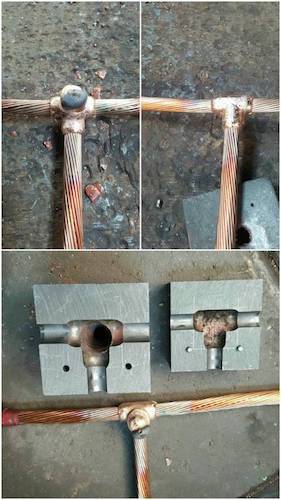
A: Place the prepared conductors into the mould's cavity, close the hinged or split body securely, and add the proper amount of exothermic welding powder. Initiate the reaction using the recommended ignition method; the mould's robust seal prevents metal leakage, and after cooling, open the mould to remove the finished joint.
Q: When should this exothermic welding mould be used over other connection methods?
A: The exothermic welding mould is preferred for permanent, highly conductive, and corrosion-resistant electrical connections, ideal for earthing, lightning protection, and cathodic protection where reliability and longevity are critical. Its utility is maximized in environments with demanding safety and performance standards.
Q: Where can this exothermic welding mould be deployed?
A: It can be used in a variety of settings including electrical substations, telecommunication towers, renewable energy sites, lightning protection installations, and industrial facilities, both indoors and outdoors due to its robust field-grade construction.
Q: What surface finish and durability features does the mould offer?
A: The mould is precision-machined to a smooth finish which enhances the quality and consistency of the weld. Manufactured from durable graphite and reinforced metals, each mould can deliver up to 90 connections, with a lifespan varying based on usage and maintenance.
Q: How does the mould ensure the safety of users during operation?
A: The mould incorporates a leak-proof design that prevents the escape of molten metal during exothermic reactions, significantly minimizing operational hazards. Additionally, the secure mould opening system and sturdy handle options contribute to safer, more controlled handling during welding processes.
Q: What are the main benefits of using an exothermic welding mould for grounding connections?
A: You gain a permanent, high-conductivity connection that resists corrosion and mechanical stress. The process requires no external power, complies with IEEE and UL standards, and is highly adaptable to a wide range of installations, offering efficiency and long-term performance.











 Send Inquiry


